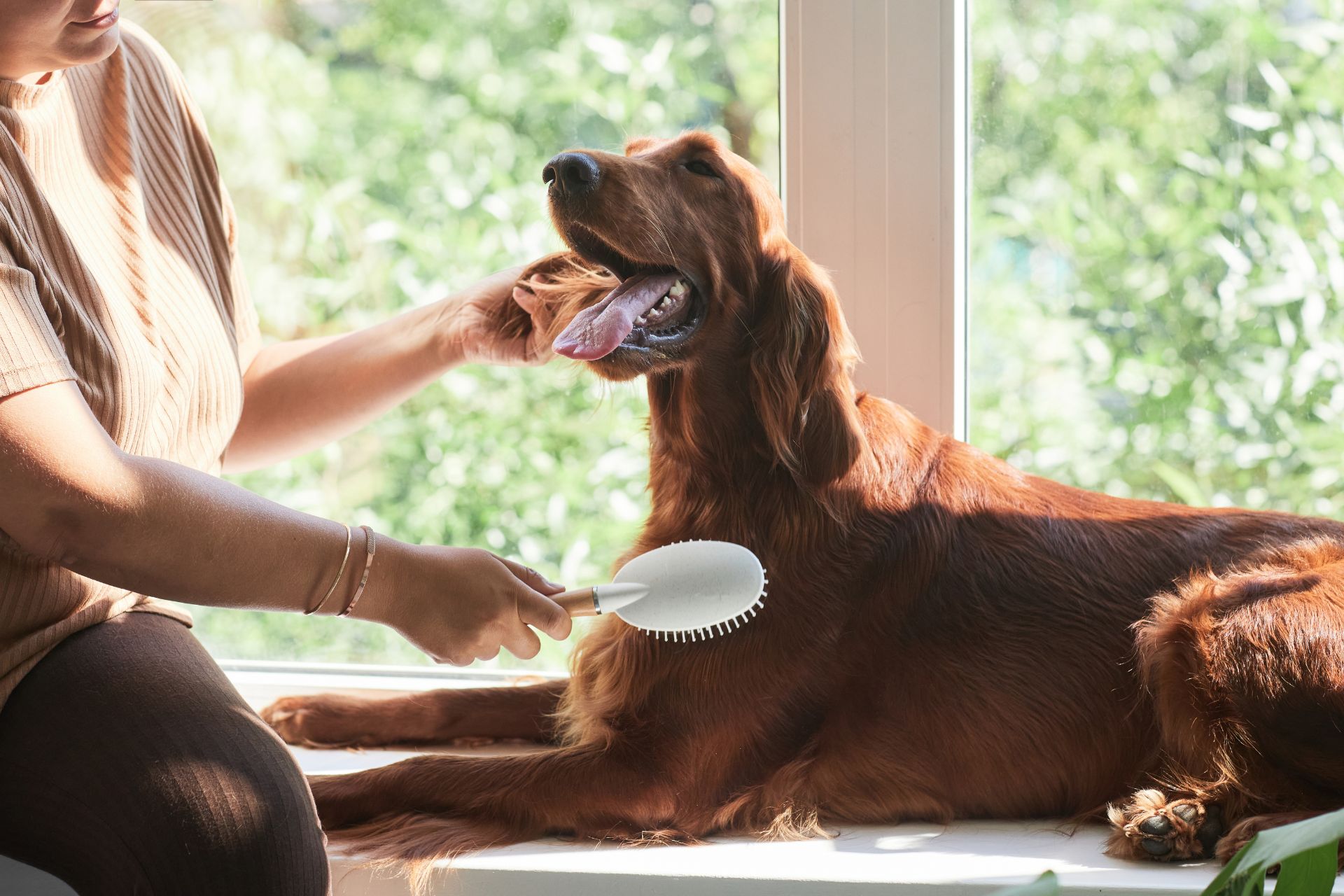
Taking Care of Dog Brushing at Home: Basics of Dog Grooming
All pet owners would agree that most dogs require a certain level of grooming on a regular basis.
The physical state of a dog naturally has an impact on her comfort level.
It can also influence how she behaves and responds to you, not to mention how you respond to her.
Are You Struggling with Brushing Your Dog at Home?
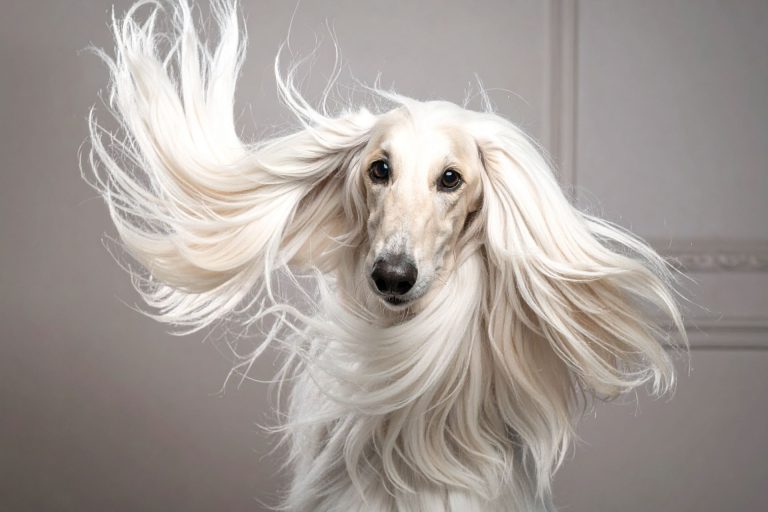
Proper grooming not only significantly enhances a dog’s appearance, but it also helps develop self-esteem and we are not just talking about the owner here. Everyone likes to show off their dog a little and it definitely helps if she looks glowing with health and shiny with cleanliness.
The Basics of Brushing Your Dog
A very basic step in dog grooming and one that you can easily manage at home is: Brushing!
Brushing has generally been acknowledged by dog groomers to be one of the most important steps in grooming.
The benefits of brushing are many. To name just a few:
- Better circulation
- A shinier coat
- A healthier coat
- Reduction in shedding
- Less hair accumulating on furniture
- Quality time with your dog
Even if you know how absolutely important brushing is for your dog’s health, well-being, and good looks, we all know that there is a right way and a wrong way to approach anything.
So what exactly is the best way to go about it?
5 Dog Brushing Steps
Here are five steps you can follow to better manage brushing your dog:
- Brush against the growth of the hair using a slicker brush.
- This helps remove loose hair effectively.
- Use a medium or wide-toothed comb.
- The comb works through tangles more gently and precisely.
- Brush along the growth of the hair.
- Make sure you brush deeply so you reach the undercoat.
- Use a flea comb next.
- Part the coat and work from the roots outward.
- Comb over the coat to remove any possible fleas.
- This step also helps catch any remaining tangles.
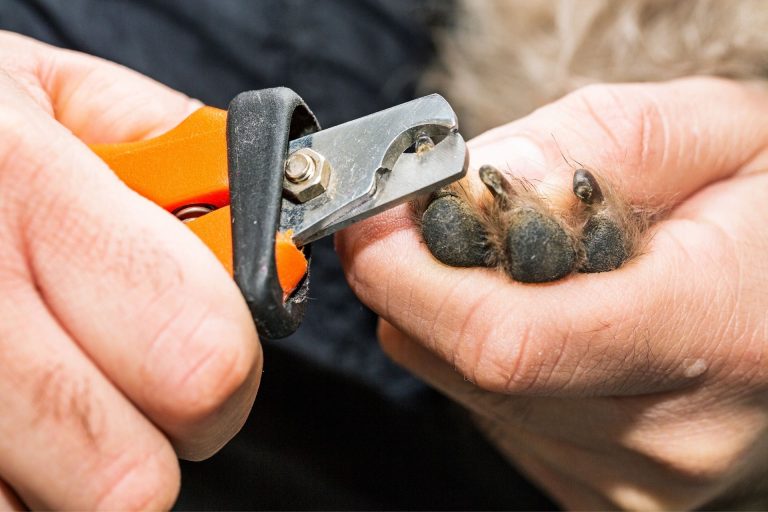
- Brush the hair around your dog’s paws.
- If the paw pads are especially hairy, you can carefully clip the long hair on top using electric clippers.
- Do not clip the hair between the pads.
- If your dog is sensitive about having her paws touched, it’s best to leave this step for your groomer.
Dog Hair Matting
Matting can become a serious issue and can even be painful for dogs. Once mats have formed, they take a lot of brushing and time to untangle.
By taking a preventative approach and brushing a long-haired dog regularly, you can greatly reduce the risk of matting.
Even with regular brushing, you may still come across the occasional tangle or mat. When this happens, use a detangling spray along with a medium-toothed comb to gently work it out.
When to Groom
It’s best not to wait too long between grooming sessions. Regular grooming is far better than waiting until your dog is dirty or showing signs of matting.
When grooming is done consistently, it becomes a much more enjoyable experience and avoids painful hair pulling.
It’s also important to introduce grooming to puppies at an early age. Early positive experiences help your dog feel comfortable and relaxed during grooming sessions.
A pleasant grooming routine is another wonderful way to bond with your dog. She’ll come to enjoy the attention and look forward to each session when grooming is introduced early.

Check out this FREE dog grooming mini course that we discovered!